

Reading, writing, cabbage
Approximately-weekly news, #76

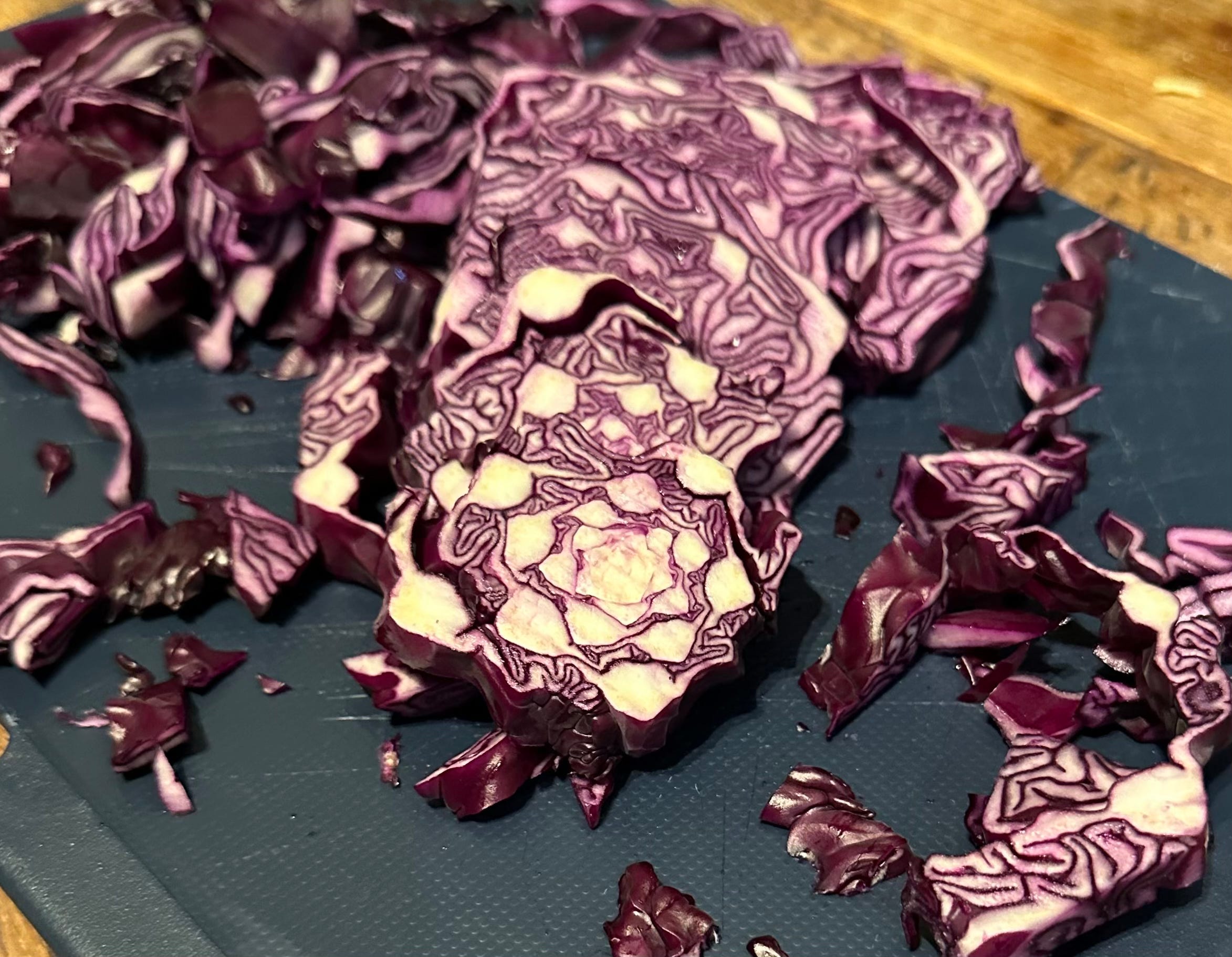
This week’s unexpected pleasure: chopping a red cabbage.* Look.
This week’s permission:
You have permission to feel the weight of what’s happening in the world. It doesn’t make you weak, it makes you human.
And if you are feeling helpless/hopeless/alone, watching this recording of a talk about protest might give you heart. It did me. (‘Setbacks are real, but so is progress.')
A couple of newsletters ago I said I was planning a Writing Week, and a few people have been in touch to ask what this actually looks like in practice. It’s a good question.
A Writing Week at home is different to going away for a writing retreat. A writing retreat is, for me, complete immersion. It’s a chance to do the work that needs a different kind of focus: looking at a novel as a whole rather than at the bit I’m in, having the headspace to make big changes and follow different possibilities.
(It’s important to note here that it would not be impossible to do this at home - I have done it, many times. I find it easier when I’m away so I tend to save the Hard Thinking for then, but I’m aware that it’s a privilege, and if you can’t do it, that definitely doesn’t mean you can’t write a book.)
A Writing Week at home is something that I give myself when I’ve been busy/away or am going to be busy/away and I can feel anxiety about writing time starting to scrunch itself into a ball in my gut, where it lurches about and, if I don’t do something about it, grows to sleep-robbing, creativity-sapping proportions.
So! This is what I do in a Writing Week.
Shunt everything that is non-urgent, or that I know people won’t mind moving, forward or back. This might include: routine dental check, approximately-weekly newsletter**, a half-agreement to meet up for a coffee, maybe on the Wednesday, let’s check in nearer the time.
Cancel, or send apologies for, things that I might otherwise have gone to: a Zoom event that will be recorded and available afterwards***; a school governor meeting that I know will be quorate without me.
Because I know that I prefer to write in the morning, and my brain is in better shape then****, I do as much as I can to clear and protect that writing time. I shower in the evening. I only book meetings for the afternoon. I have lunch late. I walk Harris without having had a cup of tea in bed first. (He very much approves of this, thinking it demonstrates Correct Priorities.)
On the Friday before a Writing Week, I spend a bit of time (maybe an hour) making a list of what I’ve written already and what I think my next few chapters are likely to be. And I print out what’s already written.
And then I tidy my desk.
On the Monday, I begin by reading through my printout. I don’t edit, but I do make notes of things that might be missing or incongruent.
I don’t make a target per se; but I have an idea of where I’d like to get to. It might be ‘It would be good to hit the 30,000 word mark this week’ or ‘If I have figured out what XX character’s story is by the end of the week that will be great’.
I also make an agreement with myself about what the week is for and what it’s not for. Usually, it’s not for editing, it’s not for going backwards, and it’s not for research. But I keep a stack of post-its to hand where I can catch thoughts and notes about restructuring/plot ideas/research needs.
I don’t try to write all day every day; I get to a point that feels right to stop***** and then I do the Other Things.
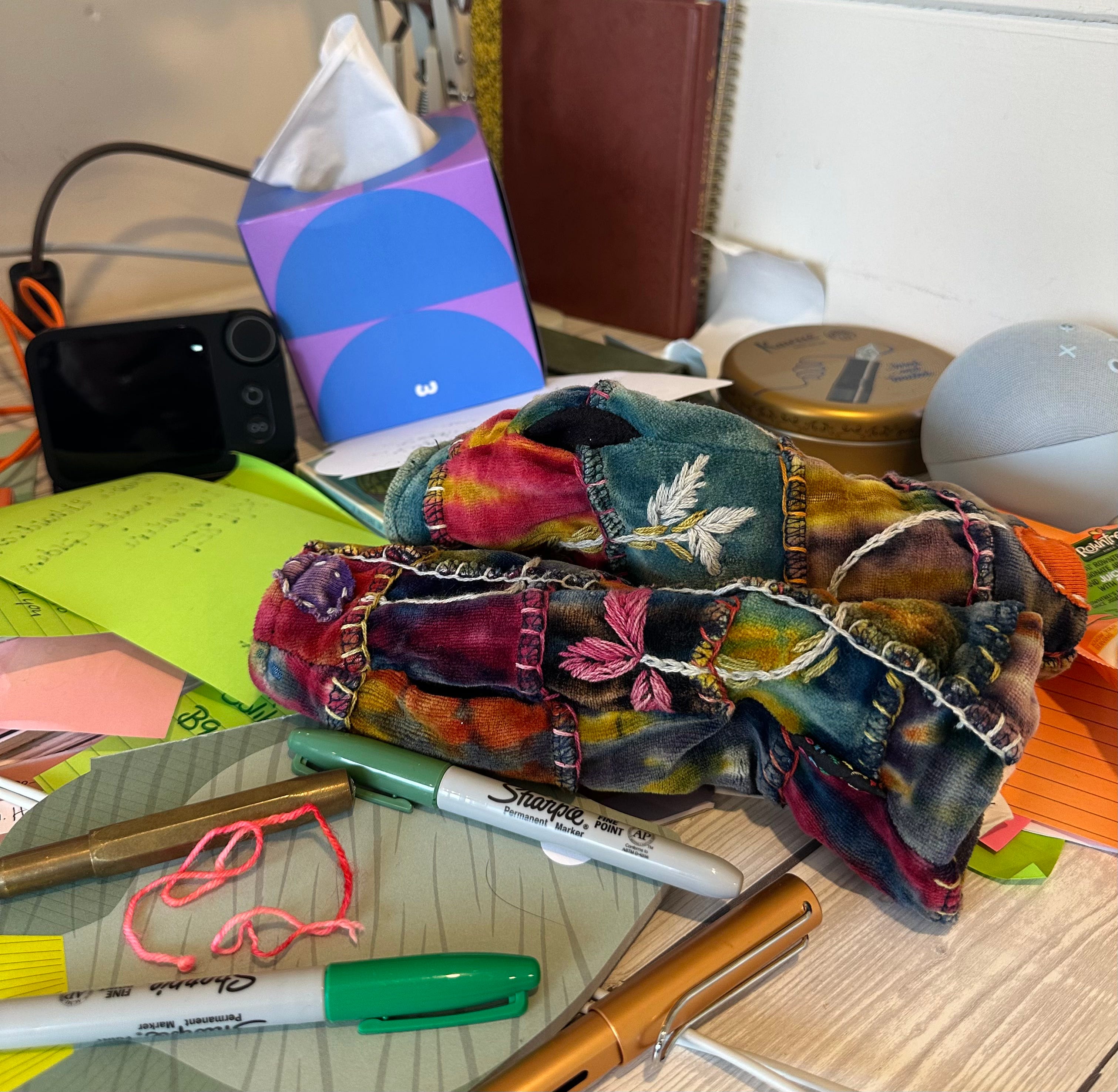
And that’s it. By the end of the week I’ll have made progress, the anxiety scrunch-ball will have shrunk to normal levels******, and my desk will be a hellscape.
Writing services update: details of what I do are here
(You can either reply to this newsletter or email me to discuss anything here.)
I have one space for a manuscript assessment or edit at the end of February and I can take on one person for mentoring in February.
Almost all of the Zoom workshops are full - the next ones will be in the autumn - except:
Creating a good writing life - Wednesday 4 February, 7-9pm 1 PLACE LEFT
Plot, story and ideas - Tuesday 10 February, 7-9pm 1 PLACE LEFT
Waiting lists are open for mentoring, manuscript assessments, developmental edits and line edits from April onwards. Going on a waiting list doesn’t commit you to anything, but makes you a priority when I open my books, and I’ll contact you if a space comes up when things move around before then.
Through December I had one of those reading not-quite-slumps, when everything I read was adequate, or fine, or mildly unsatisfactory. (I never write about these books, though in person I LOVE talking literary disappointments.) A couple of weeks ago, the Book Goddesses clearly decided that I had suffered enough, because I read three short books on the trot, and they were all brilliant, and they all linked to each other, even though I didn’t know they were going to.
First up,

‘Drive Your Plow Over The Bones Of The Dead’ by Olga Tokarczuk, translated by Antonia Lloyd-Jones. (Yes, that really is the actual cover. I wish it wasn’t. Just because we like words best doesn’t mean we can’t enjoy a picture.) It’s a crime novel from 2009, with a fantastic narrator, Janina, who is reclusive and of strong convictions. I absolutely loved her from the first page. (Top tip: read the first page of this, and if you hate it, put it back on the shelf, because the voice is everything.) One of the strands of the novel is Janina translating William Blake with her friend Dizzy, hence the novel’s title, a quote from Blake’s ‘Proverbs of Hell’:
In seed time learn, in harvest teach, in winter enjoy.
Drive your cart and your plow over the bones of the dead.
I’ve never read a novel quite like this one, and (unhelpfully) it’s difficult to describe. Words that come to mind: subversive, unconventional, absorbing.
Next, I went to ‘Practice’ by Rosalind Brown:
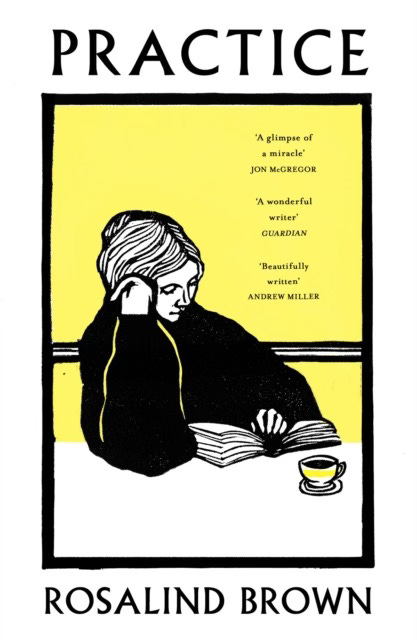
This slender and beautiful book, set in an Oxford college, tracks student Annabel’s day as she tries to write an essay about Shakespeare’s sonnets. It’s rich, funny, and imaginative, and absolutely nails the experience of being a reader and a writer, trying to catch and understand the thought that will transform everything.
And then, ‘The Party’ by Tessa Hadley:
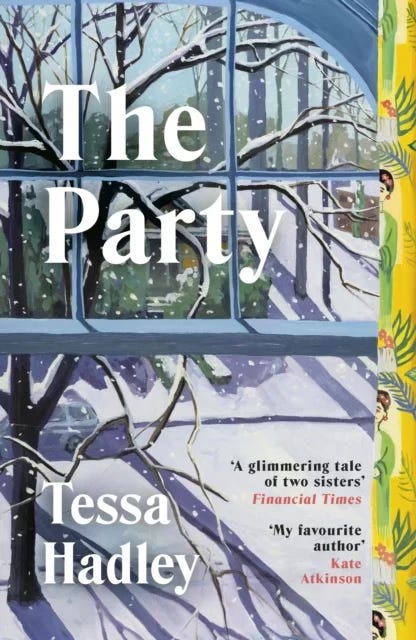
Two sisters, Moira and Evelyn, who are both students, go to two parties in post-war Bristol, and the experiences change them both, deeply. Like ‘Practice’, there’s something compellingly immediate about this novel. Tessa Hadley (who I’ve never read before) can convey the interior of someone with such utter candour and lucidity that you cannot help but read on.
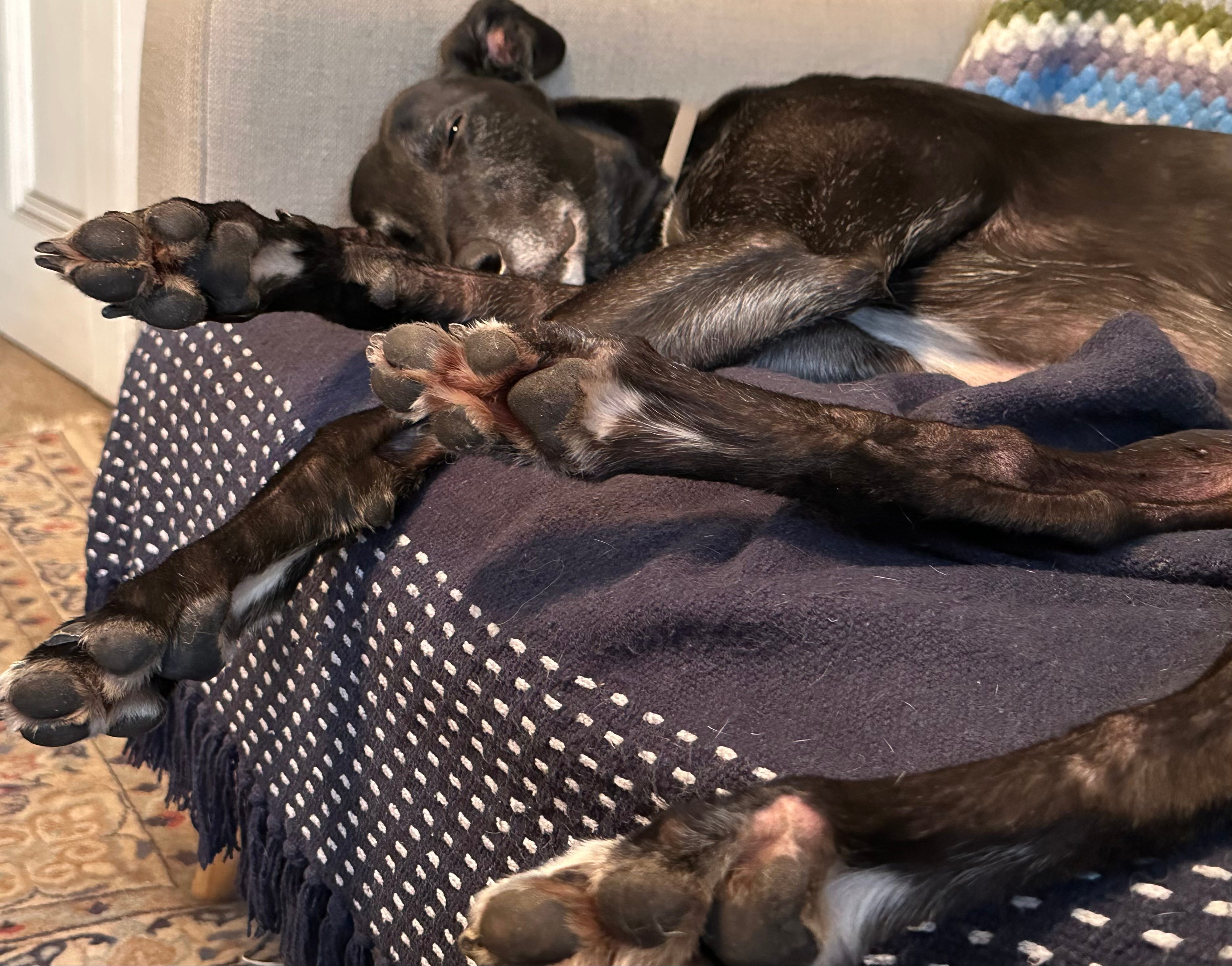
And that’s it from me this week. Harris says, keep your paws warm.
Love,
Stephanie x
*after I’d chopped it I sautéed it in butter over a gentle heat with the lid on the pan, then doused it in about 4ooml of concentrated Ribena, salt, pepper, and a couple of tablespoons of soy sauce, turned the heat up and let it bubble with the lid off for half an hour. Don’t knock it ‘til you’ve tried it…
**thank you for your patience
***not one that I’m speaking at, obviously. I’m not a monster.
****Virginia Woolf wrote about ‘the cream of the brain’ in the morning, and I like this expression so much that my own brain has transmuted it into something else entirely. I dread to think how often I have confidently declared to rooms of readers and writers that ‘Doris Lessing talked about the cream of the morning brain…’
*****this is deeply unhelpful, and I apologise
******will anyone like my book? what if I never have an idea again? etc etc
The cabbage sounds interesting, I might give it a try. As for ******will anyone like my book...It helps us all to know that all writers experience these moments of quivering anxiety. The Second Chance Book Club was my introduction to you as an author, and now I am making room for your Lost Bookshop series and others on my reading list. Yes, I will read what you write. You pull me in, and I feel as if we are sitting across the table from one another with knitting and a warm beverage nearby.
Striving to have regular writing weeks in my future! Also I hope to refer a friend to you in the near future!